
15/02/2026
Administrator
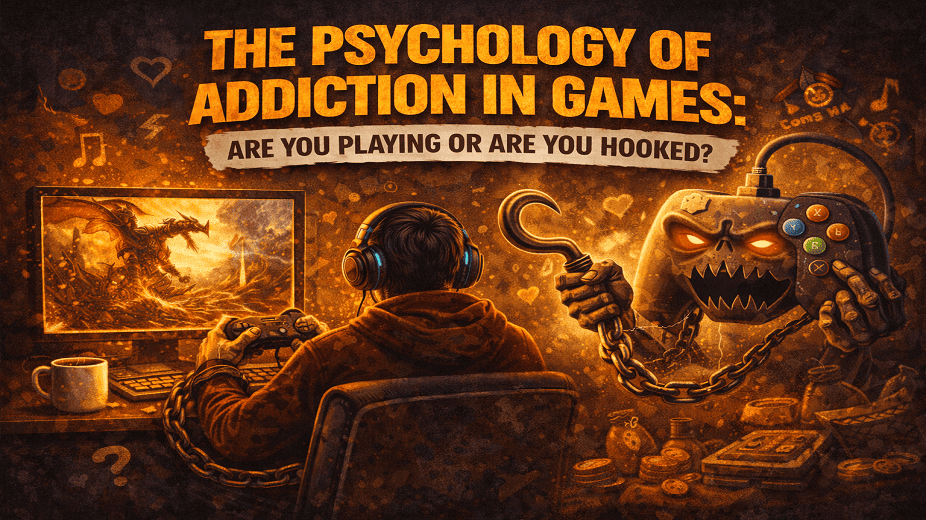
The Psychology of Addiction in Games: Are You Playing or Are You Hooked?
Man, I still remember that night like it was yesterday. It was past 3 a.m., my eyes were stinging, I had work in a few hours, and I was telling myself “just one more run” for the hundredth time. The chest opened, another mediocre item dropped, but that tiny spark of hope kept me clicking. My back hurt, my room was dark except for the screen glow, and deep down I knew I should stop. But I couldn’t. That moment messed with me. Was I just having fun with a game, or had something in my brain gotten properly hooked?
If you’ve ever lost track of time in a game, ignored texts from friends, or felt that weird guilt mixed with excitement when you open “just one more” loot box, you’re not weird. You’re human. And in 2026, with phones in every pocket and games that never really end, this question hits different: Are you playing the game, or is the game playing you?
Games are supposed to be escape, challenge, fun with friends. For most people, they stay that way. But for some, they slide into something compulsive. The crazy part? It’s not usually about being weak-willed. Developers have gotten scary good at using psychology that lights up the same brain pathways as gambling or social media scrolling. Dopamine, unpredictable rewards, fear of missing out — they’re all in the mix. Understanding it doesn’t mean you have to quit everything cold turkey, but it does mean you can play smarter.
Let’s get real about what’s happening upstairs. When you nail a tough level, pull a rare skin, or win a ranked match, your brain dumps dopamine — that feel-good chemical tied to reward and motivation. It’s the same system that lights up for food, sex, or winning money. Games just figured out how to trigger it over and over.
The real magic (or trap) is variable rewards. You never know exactly what you’ll get. One loot box might be trash. The next could be the epic item you’ve been chasing. That uncertainty keeps the dopamine flowing stronger than predictable rewards ever could. It’s why slot machines are addictive — the anticipation itself becomes the hook.
I felt this hard in a mobile game I downloaded during a slow week at work. I’d tell myself “just open a few packs before bed.” Most were nothing special, but that occasional decent pull? The rush made me keep going. Before I knew it, an hour had vanished. It wasn’t the gameplay skill keeping me there. It was the slot-machine brain working exactly as designed.
Loot boxes get called out for this all the time, and for good reason. Recent studies keep showing links between buying them and problem gambling symptoms, plus higher rates of gaming issues and stuff like anxiety or impulsivity. One big survey of over 1,400 adults found risky loot box spending tied to real gambling behavior and mental health struggles. The randomness mimics gambling so closely that some places treat them like betting.
But it’s not only loot boxes. Daily logins, battle passes, limited events, streaks — they all mess with you. Once you’ve hit a seven-day streak, breaking it feels worse than missing a single reward. Your brain hates losing progress more than it loves new gains. That’s loss aversion doing its thing.
Games don’t stop at solo rewards. They pile on social pressure and scarcity that make logging off feel risky.
Fear of Missing Out is everywhere. Seasonal skins, time-limited modes, exclusive events — if you skip, you lose out forever (or at least until they bring it back for more money). Developers time these for evenings and weekends when you’re most likely to say “screw it, I’ll play.”
I’ve done it. Skipped hanging out with actual friends because “the new raid drops tonight and my guild needs me.” In the moment it felt important. Looking back? Pretty silly. But the design makes it feel urgent on purpose.
Then there’s the social layer. Guilds, clans, friends lists — suddenly playing feels like showing up for your team. “They’re counting on me” triggers guilt or loyalty that single-player stuff rarely does. Leaderboards add competition. Seeing your buddy climb higher pushes you to grind longer than you planned.
And the progression? Modern live-service games love endless treadmills. Hit max level? Here’s prestige, a new season, or another battle pass. Satisfaction is always “just one more” away. No real ending means no natural stopping point.
Mobile takes this to another level because the game lives in your pocket. Notifications hit you with “energy full,” “daily rewards waiting,” “your base is attacked.” Those quick sessions add up fast. Some research points to competitive or obstacle-heavy mobile games carrying higher risk because they mix short bursts with strong rewards and social hooks.
I thought switching to mobile during a busy period would keep things light. Nope. The constant pings made it harder to fully disconnect than dedicating a block of time at my desk.
Not every heavy gamer is addicted. Plenty of people pour in hours and still handle life fine. The difference is control and consequences.
The World Health Organization lists gaming disorder in ICD-11: impaired control, gaming taking priority over everything else, and continuing despite clear harm. The DSM-5 has Internet Gaming Disorder with similar red flags — preoccupation, withdrawal (getting irritable when you can’t play), tolerance (needing more time for the same buzz), and failing to cut back.
Real signs sneak up. Skipping sleep or meals. Lying about how long you played. Work or school slipping. Dropping hobbies or people that aren’t game-related. Using games to numb stress, anxiety, or boredom instead of facing it.
I’ve watched friends slide. One lost most of a college semester raiding at night. Another let a relationship crumble because the game always came first. Stories like Cam Adair’s hit different. He was playing up to 16 hours a day, dropped out of school twice, lived in his parents’ basement, dealt with depression and suicidal thoughts. He quit cold turkey for years, rebuilt by filling that time with real goals, friends, and structure. His story went viral and led to Game Quitters, a big support community.
A lot of these stories share a pattern: gaming often covers for other stuff — loneliness, bullying, low self-esteem, mental health struggles. The virtual world gives achievement, community, and escape when real life feels too much. But the more you lean on it, the harder real life gets to handle.
The slide is usually gradual. Starts with a fun new game everyone’s into. Then later nights. Then spending money you know you shouldn’t. Suddenly gaming is your default, and everything else feels optional.
Some titles crank the addictive potential higher. Heavy monetization — loot boxes, gacha, battle passes — scores big on risk. Competitive ranked modes feed the “one more match” urge. Mobile often wins on convenience and micro-sessions that slip into any gap.
Certain people get pulled in easier. Impulsivity, anxiety, depression, or family history of addiction (including gambling) raise the odds. Younger brains are still wiring reward systems, so they can hook faster. But adults aren’t safe — I’ve seen plenty in their 20s and 30s whose jobs and relationships took hits.
Recent work keeps linking loot box spending to gambling symptoms, with impulsivity and anxiety making the connection stronger. Competitive or immersive genres show higher disorder risk in some studies because of how they pace rewards and pull you in.
I don’t want to paint everything dark. Games can build real friendships, sharpen reactions, teach strategy, and deliver legit joy. They’ve helped people through tough times. The issue isn’t gaming itself — it’s when it stops being a choice and starts steering your life.
If you think you might be leaning hooked, try small tests. Track your actual playtime honestly for a week. Notice how you feel right before, during, and after sessions. Set a hard limit and watch how uncomfortable it feels — that discomfort often tells you something. Swap some gaming time for other dopamine hits: exercise, a real hobby, face-to-face time with people.
Lots of people who’ve come out the other side talk about “replacing” instead of just quitting. Cam filled his 16 hours with work, social stuff, and growth. Others make rules like no gaming until certain real-life tasks are done, or keeping devices out of the bedroom at night.
Help exists if you need more. Therapy (especially cognitive behavioral approaches for behavioral addictions), support groups, or even short structured detoxes can work. Dealing with whatever’s underneath — stress, mental health — usually matters more than deleting apps alone.
For parents or partners seeing someone struggle, curiosity beats judgment. Ask what the game gives them that real life isn’t right now. Work on boundaries together instead of sudden ultimatums when possible.
I still game, but I changed how. I pick titles with actual endings or play in shorter, deliberate bursts. I cut the ones that triggered endless grinding and notifications. Some nights I grab a book or go for a walk instead. It feels less automatic now, more like a real decision I make.
The industry knows what it’s doing. They test these mechanics because retention equals revenue. Variable rewards, streaks, FOMO — they’re not accidents. That doesn’t make every dev evil, but it does mean we players have to stay aware.
At the end of the day, ask yourself straight: Am I playing because I genuinely want to right now, or because stopping feels bad? Does this add to my life or quietly take away from it? If even a little of the second feels true, it’s worth hitting pause and resetting.
You don’t have to quit forever unless that’s what you need. But knowing the psychology hands you back some control. The games are built to hook. Your brain is flexible enough to step back if you give it space and better alternatives.
What about you? Ever felt that quiet shift from “this is fun” to “I can’t stop”? Noticed certain mechanics that always suck you back in? Or found ways to keep gaming healthy? Share if you want — talking about it openly is part of keeping perspective. No judgment here. We’re all figuring it out.
 Arcade
 Action
 Adventure
 Shooting
 Girl
Girl Puzzle
 Sport
Sport Horror
 Board
Board