

21/03/2026
Administrator
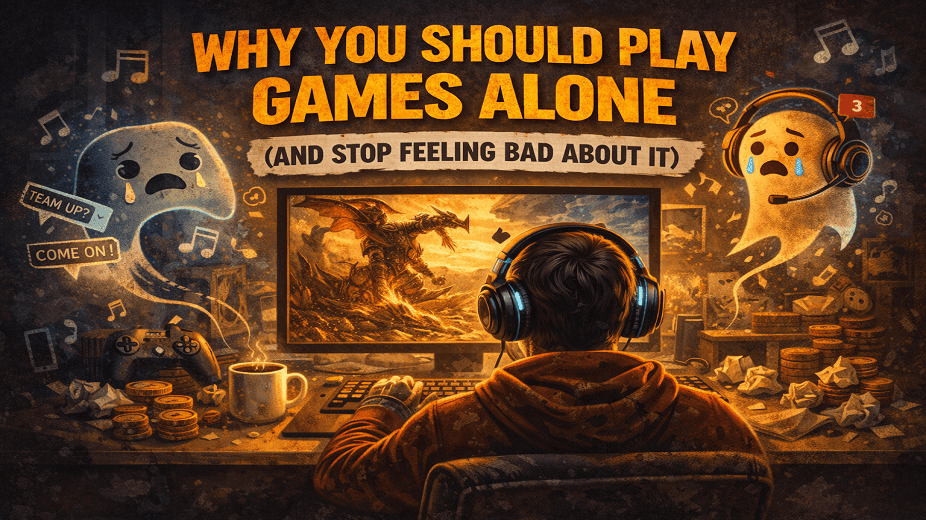
Why You Should Play Games Alone (And Stop Feeling Bad About It)
Last weekend I bailed on my friends again. They wanted to hop on Discord for some ranked matches, the usual chaos. I told them I was tired and just wanted to finish Silent Hill 2 remake by myself. The reply came quick: “Bro you good? You’ve been ghosting us a lot lately.” It stung a little. Not because I felt bad about my choice, but because that guilty voice in my head whispered the same thing. Like staying in to game alone makes me some kind of loner or failure at being social.
I’m done with that voice. And if you ever feel it too — that weird shame when you pick a single-player game over group stuff — this is for you. Playing games alone isn’t sad, antisocial, or a sign you’re wasting your life. It’s actually one of the smartest, most refreshing ways to enjoy gaming. I’ve been doing it more intentionally lately, and honestly? My head’s been clearer, my stress lower, and my enjoyment way higher.
Here’s the thing most people don’t realize: the guilt isn’t really about gaming. It’s about this dumb idea that every hobby has to be social now. We shame solo activities that don’t involve other people, but nobody bats an eye when someone curls up with a book or watches a movie alone. Gaming gets the special treatment because it’s fun and immersive, so people assume it should always involve friends or strangers yelling in voice chat. Bullshit.
Think about it. The gaming industry pushes multiplayer hard because that’s where the recurring money lives — skins, battle passes, events that make you feel like you’re missing out if you log off. Social features get hyped as the future. Meanwhile, single-player games often get treated like the boring older sibling. Yet when you look at actual numbers, a ton of gamers quietly prefer playing alone.
I’ve seen friends post about their epic squad wins, but in private chats they admit they sometimes just want to chill with a story game and not talk to anyone. One buddy who’s usually the loudest in calls confessed he spent an entire weekend on Elden Ring solo and felt guilty the whole time. Why? Because somewhere along the line we started believing that real fun = other people.
I used to feel it bad. Back when I was younger, turning down plans to game felt like I was choosing fake worlds over real ones. Now I see it differently. Those solo nights aren’t avoidance — they’re recharge time. After a week full of meetings, emails, and small talk, the last thing I want is more voices in my ears. I want quiet control over my evening.
One night after a brutal day at work, I loaded up a calm exploration game instead of joining the usual crew. No one asking questions, no one raging when someone dies. Just me wandering, solving little puzzles, soaking in the atmosphere. Two hours later I felt human again. If I’d forced the group session, I probably would’ve been short-tempered and logged off annoyed. Solo gave me exactly what I needed.
This is the part I love most about solo gaming: total freedom.
When you play with others, compromise is inevitable. Someone wants to rush the main story. Someone else wants to collect every pointless item. The guy with work tomorrow keeps checking the clock. You end up skipping cutscenes, ignoring side stuff, or pushing through sections when you’re not in the mood. The experience gets watered down.
Alone? You set every rule. Want to stand still and stare at the sunset for ten minutes because it looks pretty? Go for it. Want to die to the same boss twenty times until you finally click with the pattern? No one’s sighing in your ear. Need to pause because your brain is fried or your stomach is growling? Pause. No guilt.
I can’t count how many co-op sessions I’ve left early because the vibe was off. One friend gets tilted too easily. Another talks nonstop strategy like it’s a job. In solo games, the only voice is mine (and the game’s). That means I can actually get lost in the world instead of performing or keeping up.
Story games especially hit different alone. The Last of Us, Red Dead Redemption 2, God of War — those moments land harder when you’re not rushing or listening to someone spoil the next twist. You get to feel the weight of choices, sit with the quiet parts, and let the story breathe.
Even non-story stuff feels better solo sometimes. A tough puzzle game, a creepy horror title, or a relaxing sim — they’re designed for one person’s full attention. No backseat gamers yelling directions. No randoms ruining the tension with dumb jokes.
I tried co-op on a narrative game once with a friend. We spent half the time arguing about which path to take and missed half the emotional beats. Never again. Some experiences are meant to be private, like reading a good book. Solo gaming lets you have that intimacy with the game.
Solo gaming isn’t just fun — it can actually help your head.
When you’re fully locked into a single-player world, your brain gets a break from all the social noise of daily life. No small talk. No worrying if you’re talking too much or too little. No performing. Just pure focus or pure chill, depending on the game.
I’ve used it like therapy on tough days. After arguments, bad news, or just general burnout, jumping into something absorbing alone helps me reset. The immersion pulls me out of my own spinning thoughts. Some nights it’s a challenging action game that burns off frustration. Other nights it’s something cozy where nothing bad happens and I can just exist.
There’s research showing that intentional alone time — including hobbies like gaming — improves creativity, self-awareness, and emotional regulation. It’s not the same as isolation. Isolation feels lonely and empty. Solitude feels chosen and restorative. Solo gaming gives you the good kind.
Even the cognitive side benefits. Solo games often force you to solve problems, remember details, and explore without help. That mental workout can sharpen focus in ways quick multiplayer matches don’t always match. You own every win and learn from every loss without external noise.
During one particularly rough month last year, my solo sessions were the only consistent bright spot. I wasn’t avoiding people — I was recharging so I could show up better when I did hang out. After a good solo night, I usually felt more patient with friends, not less.
And let’s talk about the dark side of group gaming that nobody wants to admit. Voice chat can turn toxic fast. Random teammates yelling slurs, friends getting tilted and taking it out on everyone, endless backseat advice. Even “good” groups have off nights that leave you more stressed than when you started. Solo gaming skips all that drama completely. You play when you want, how you want, without worrying about someone else’s mood.
This is the fear that keeps a lot of us from fully embracing solo play: “If I like playing alone, does that mean I’m becoming antisocial?”
No. Enjoying your own company doesn’t cancel out enjoying other people’s. I still play with friends. We have nights where we laugh until we cry, coordinate epic comebacks, or just vibe. Those sessions are great for different reasons — connection, shared laughs, teamwork.
But they’re social events, not pure gaming time. Solo nights are my me-time. One doesn’t replace the other. They serve different needs.
Plenty of introverts or folks with social batteries that drain fast find solo gaming perfect. It gives the stimulation and achievement of gaming without the exhaustion of constant interaction. Even extroverts need quiet time to recharge. Forcing every hobby into a group thing turns fun into another obligation on your calendar.
I have friends who are the life of every party but still carve out solo gaming time because they know they need it. One of them told me, “I love my crew, but sometimes I just want to play without talking or worrying about anyone else’s fun.”
That’s healthy. Real connection happens when you show up as your best self, not when you force yourself into every group activity out of guilt.
Not every game needs company. In fact, many lose something when you add other people.
Deep story games, atmospheric horror, thoughtful exploration titles — these shine brightest solo. You get to sit with the quiet moments, make choices that feel personal, and experience the world without distractions.
I tried playing a horror game with a friend once. Every time something scary happened, he’d joke or talk over it. The tension evaporated. Another time with a story-heavy game, we kept pausing to discuss theories and missed half the emotional weight. Never again.
Games like Death Stranding, Soma, or What Remains of Edith Finch are built as personal journeys. They hit harder when it’s just you in the dark with headphones on.
Even mechanically, solo often wins. You learn at your own pace. You experiment without pressure. You fail and retry without anyone watching or judging your skill level.
That doesn’t mean multiplayer is bad. Some games — certain co-op puzzles or raids with the right crew — are magical together. But pretending every title improves with company does a disservice to games designed as intimate solo experiences.
If you feel guilty about playing alone, ask yourself honestly where it comes from. Is it really concern for your social life, or is it leftover judgment from people who don’t understand gaming? Or pressure from the loudest parts of the community that treat solo play like it’s lesser?
Your hobby doesn’t need to be justified to anyone. You don’t owe constant availability or group participation. Saying “I’m gonna play alone tonight” is a complete sentence.
Next time the guilt hits, try tracking how you actually feel. After a solo session, do you feel drained or refreshed? Compare it to nights where you forced group play when you weren’t in the mood. For me, the solo nights usually win on pure enjoyment and recovery.
Balance still matters. If gaming — alone or with others — is replacing everything else in your life, that’s worth looking at. But moderate solo gaming? That’s not a problem. That’s self-care with better graphics.
If you want to shake off the guilt, start treating solo time like the valid choice it is.
Pick a game that feels made for one player. Something with a strong atmosphere, deep story, or pure gameplay that doesn’t need company. Turn off notifications. Get comfortable. Let yourself disappear into it without checking your phone every ten minutes.
Try different moods. One night a challenging action game to blow off steam. Another night something peaceful where nothing bad ever happens. Notice what clicks when it’s just you.
And when people tease you about it, own it lightly. “Yeah, I love my solo gaming nights. It’s how I unwind.” Most will respect it if you say it without apology. The ones who don’t? Their opinion doesn’t get to run your free time.
I still join the squad when I’m in the mood. But I no longer feel bad about choosing solo when that’s what I actually want. Both have their place. Both add something different.
At the end of the day, gaming should feel good, not like another thing you’re supposed to do “correctly.” Solo play gives you full ownership of that feeling — no compromises, no performance, no external pressure. Just you and the game doing what you both do best.
So the next time that guilty voice pipes up, tell it to shut up. Grab your controller or keyboard, get comfortable, and enjoy the hell out of your solo session. You’ve earned it. No explanations needed.
What about you? Do you play mostly alone or with others? Have you ever felt that weird guilt, and how do you handle it? Or is there a game that only feels right when you’re completely by yourself? I read every comment — sometimes the best advice comes from people who get it.
 Arcade
 Action
 Adventure
 Shooting
 Girl
Girl Puzzle
 Sport
Sport Horror
 Board
Board